


Prayer Tops List of Treatments in Army Medical Study
 In a survey of more than 16,000 active duty troops, The Journal of Alternative and Complementary Medicine reports that prayer is the most common “alternative medicine” (CAM) used in the military. Additionally, the Army-backed study indicates that active duty members use alternative therapies for stress reduction at rates up to seven times higher than civilians, and among both troops and civilians, the most popular therapy is prayer.
The report confirms that prayer continues to be “at the top of the list of treatments” for combat stress. Scientific research from World War II reported similar findings:
“The Studies in Social Psychology in World War II Series,” produced by the Social Science Research Council, was one of the largest social science research projects in history. Volume II, The American Soldier, Combat and Its Aftermath, Princeton University Press, (1949), reported data on the importance of prayer to officers and enlisted infantrymen. Prayer was selected most frequently as the soldier’s source of combat motivation. The motivation of prayer was selected over the next highest categories of “thinking that you couldn’t let the other men down,” and “thinking that you had to finish the job in order to get home again.” From the responses, “did not help at all,” “helped some,” and “helped a lot,” 70% of enlisted men in the Pacific Theatre (n = 4,734), and 83% in the Mediterranean theatre (n = 1,766) responded “helped a lot,” as did 60% of Infantry officers (n = 319).
These data would suggest that combat men who had experienced greater stress were at least as likely to say they were helped by prayer as those who had been subjected to less stress” (p. 176)…[T]he fact that such an overwhelming majority of combat men said that prayer helped them a lot certainly means that they almost universally had recourse to prayer and probably found relief, distraction, or consolation in the process (p. 185). [Emphasis added.]
We are encouraged by this recent report by the Army reaffirming the importance of prayer to those who fight for our freedom and it further validates the necessity of prayer to their health and survival.
—-
How has prayer affected your life in a positive way? Post a comment and share it with us!

The Right to Pray Under Attack
The right to pray lives on in America’s Armed Forces, but the freedom to do so without the fear of punishment reigns in the hearts of many service members as well as civilian leaders, legislators and even high school valedictorians. The attack on prayer in the public arena is not new to American society. This battle has been around for decades and continues to be a recurring news topic. Below is a brief list of news headlines recording the ongoing conflict:
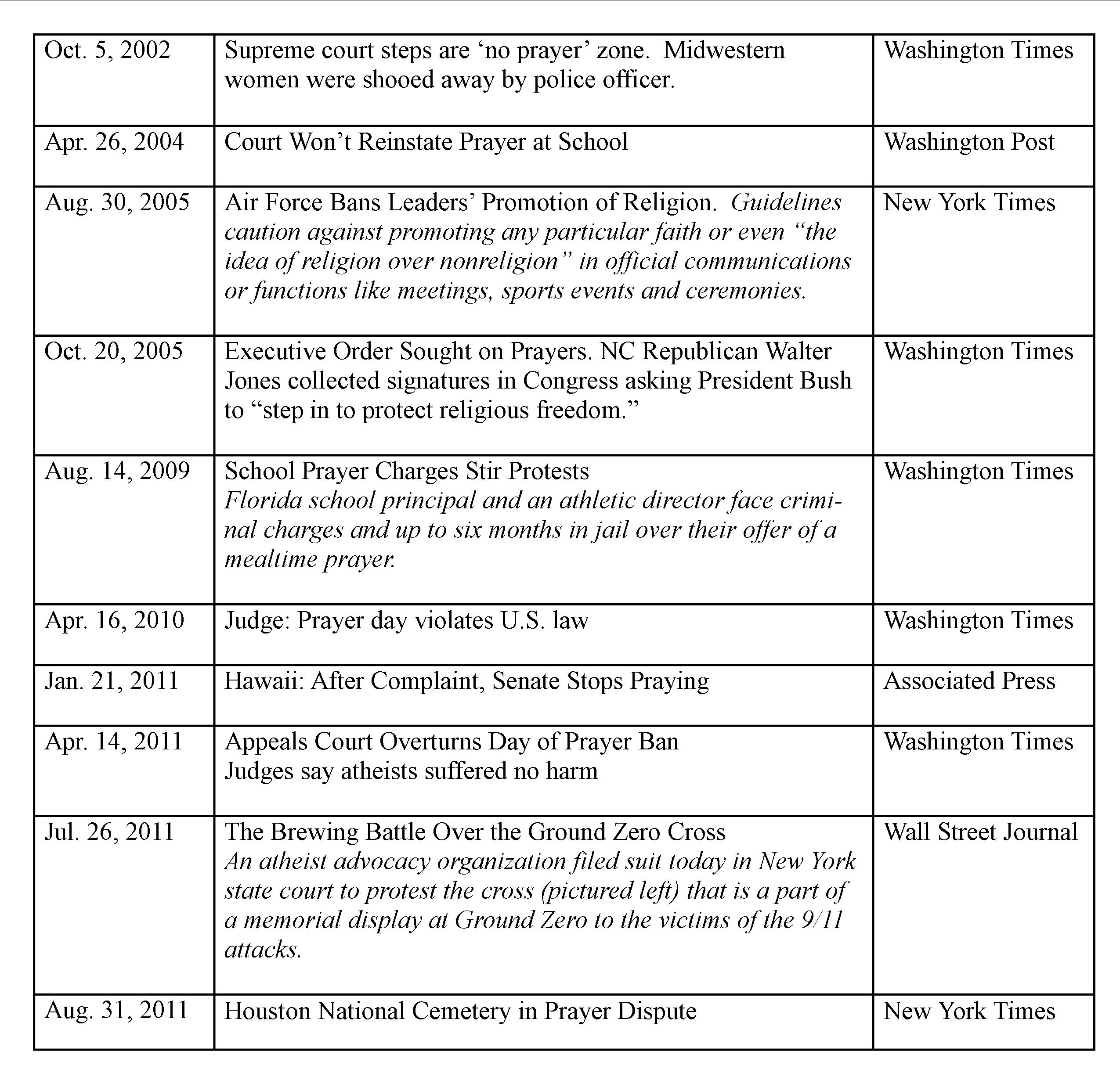
There are numerous examples of national and military leaders who petitioned Almighty God on behalf of those under their command. On June 6, 1944, President Roosevelt called upon the entire nation and led them in prayer during his radio address, praying for our assault forces and for the families of those who would give the supreme sacrifice in the D-Day invasion.[1] During World War II, an exemplary officer, General George Patton led the famous and effective prayer for favorable weather during the crucial 1944 Battle of the Bulge. Patton’s prayer was issued to 3,200 officers and chaplains in the Third Army to “…urge, instruct, and indoctrinate every fighting man to pray as well as to fight.”[2]
American’s right to pray has been a foundational part of this country since the creation of our Republic in 1775, both in the military and the public square. It is time that We the People stand up to political agendas and groups focused on removing all historical, Christian foundations from this once, great nation and help Americans feel proud to pray once again.
[1] Jack Dixon, Our Sons Will Triumph, From the D-Day prayer of the Commander in Chief of the Armed Forces of the United States, Franklin Delano Roosevelt, June sixth, 1944. NY: Thomas Y. Crowell, 1944.
[2] James H. O’Neill, The True Story of the Patton Prayer. The Military Chaplain. Vol. 19, No. 2, at 3, 13 (1948).
——
Were you aware of this suppression before you read the article? Talk to us and tell us what you know. How are you making a difference? Post a comment, we’d love to hear from you.
Research on the Health Benefits of Prayer
Why People Who Pray Are Healthier Than Those Who Don’t
by Richard Shiffman
Huffington Post
If you want to achieve maximum health, here are a few things that you should do: exercise regularly, eat nutritious and minimally processed foods, drop those extra pounds — and pray. That’s right, regular prayer and meditation has been shown in numerous scientific studies to be an important factor in living longer and staying healthy.
Prayer is the most widespread alternative therapy in America today. Over 85 percent of people confronting a major illness pray, according to aUniversity of Rochester study. That is far higher than taking herbs or pursuing other nontraditional healing modalities. And increasingly the evidence is that prayer works.
It doesn’t matter if you pray for yourself or for others, pray to heal an illness or for peace in the world, or simply sit in silence and quiet the mind — the effects appear to be the same. A wide variety of spiritual practices have been shown to help alleviate the stress levels, which are one of the major risk factors for disease. They also are powerful ways to maintain a positive outlook and successfully weather the trials which come to all of us in life.
The relationship between prayer and health has been the subject of scores of double-blind studies over the past four decades. Dr. Herbert Benson, a cardiovascular specialist atHarvard Medical School and a pioneer in the field of mind/ body medicine discovered what he calls “the relaxation response,” which occurs during periods of prayer and meditation. At such times, the body’s metabolism decreases, the heart rate slows, blood pressure goes down, and our breath becomes calmer and more regular.
This physiological state is correlated with slower brain waves, and feelings of control, tranquil alertness and peace of mind. This is significant because Benson estimates that over half of all doctor visits in the U.S. today are prompted by illnesses, like depression, high blood pressure, ulcers and migraine headaches, that are caused at least in part by elevated levels of stress and anxiety.
Dr. Andrew Newberg, director of the Center for Spirituality and the Mind at the University of Pennsylvania conducted a study of Tibetan Buddhists in meditation and Franciscan nuns in prayer which showed comparable decreased activity in the parts of the brain that are associated with sense of self and spatial orientation in both groups. He also found that prayer and meditation increase levels of dopamine, which is associated with states of well being and joy.
The effects of spiritual practice appear to be more than just the result of enhanced focus and concentration. Ken Pargement of Bowling Green State University instructed one group of people who suffer migraines to meditate 20 minutes each day repeating a spiritual affirmation, such as “God is good. God is peace. God is love.” The other group used a nonspiritual mantra: “Grass is green. Sand is soft.” The spiritual meditators had fewer headaches and more tolerance of pain than those who had focused on the neutral phrases.
But are the calming effects of spiritual practice temporary, or do they last even after we get up from the meditation cushion or leave a prayer service to reenter our less than serene lives?
In one National Institutes of Health funded study, individuals who prayed daily were shown to be 40 percent less likely to have high blood pressure than those without a regular prayer practice. Research at Dartmouth Medical School found that patients with strong religious beliefs who underwent elective heart surgery were three times more likely to recover than those who were less religious. A 2011 study of inner city youth with asthma by researchers at the University of Cincinnati indicates that those who practiced prayer and meditation experienced fewer and less severe symptoms than those who had not. Other studies show that prayer boosts the immune system and helps to lessen the severity and frequency of a wide range of illnesses.
A recent survey reported in the Journal of Gerontology of 4,000 senior citizens in Durham, NC, found that people who prayed or meditated coped better with illness and lived longer than those who did not.
But the question remains: By what physiological mechanisms does prayer impact our health? Herbert Benson’s most recent research suggests that long term daily spiritual practices help to deactivate genes that trigger inflammation and prompt cell death. That the mind can effect the expression of our genes is exciting evidence for how prayer may influence the functioning of the body at the most fundamental level.
But what about praying for others? On the question of whether intercessionary prayer works, the jury is till out. Slightly over half the research done to date suggests that it helps, wile the rest concludes that there is no measurable effect. Critics of these studies say that there is a big difference between praying more or less mechanically and at a distance for a stranger because a researcher has told you to do so and the heartfelt prayers for friends and relatives which arise spontaneously from within.
Prayer, unlike say the behavior of a rat in a maze, cannot be directly observed, and the subtle effects on self and others are difficult to quantify and assess. Moreover, it would be wrong to view prayer as merely a technique to heal illness and promote physical health.
Spiritual practice aims to connect the individual with God or a Higher Power, to open one to the Divinity dwelling within the self, and to make one fully present to life in the here and now. These are not goals that lend themselves to being measured in double blind experiments. The sense of deep peace and radiant well being that spiritual practitioners in different religious traditions report are also not testable by scientific means.
What science can tell us is that people who pray and meditate trend to be statistically more healthy and live longer than those who do not. Whether these boons are merely unintended side effects of still deeper spiritual benefits remains a matter of faith.
Rear Admiral Says Religious Liberty Under Threat in Military
By Todd Starnes
Fox News
A high-ranking Coast Guard official said at a National Day of Prayer gathering that religious liberty in the U.S. military is being threatened and that service members are being told to hide their faith in Christ, according to a videotape obtained by Fox News.
“As one general so aptly put it – they expect us to check our religion in at the door – don’t bring that here,” Rear Admiral William Lee told a National Day of Prayer gathering. “Leaders like myself are feeling the constraints of rules and regulations and guidance issued by lawyers that put us in a tighter and tighter box regarding our constitutional right to express our religious faith.”
The crowd of religious leaders and lawmakers cheered for nearly a minute when Lee vowed to defy any attempt to curtail religious liberty within the Armed Forces.
“I am coming out today to tell you I am not going to run from my religious beliefs, from my right under the Constitution to tell a young man there is hope,” he declared in remarks first reported by World Magazine.
Lee told the audience he had set aside his prepared remarks and instead chose to speak from the heart about the challenges facing Christian service members.
“The problem that men and women like me face in uniform who are in senior leadership positions is that the higher you are – the more vulnerable you are to being taken down,” he said. “You get in the crosshairs of those people who lay in wait outside the gate – waiting to take us to task for expressing our faith.”
Read more of the story: http://radio.foxnews.com/toddstarnes/top-stories/rear-admiral-says-religious-liberty-under-threat-in-military.html
Mixed votes from HASC on military religious freedom
Jun. 5, 2013
By Rick Maze
Navy Times
 By voice vote, the committee passed an amendment sponsored by Rep. Walter Jones, R-N.C., allowing chaplains to following the traditions, expressions and religious exercises of their faith. That means, for example, to be able to complete a prayer “in Jesus’ name.”
Chaplains already have the right under existing policy to follow practices of their own faith during a religious service, but Jones’ amendment expands this to include situations when a chaplain is called upon to lead a prayer.
However, the committee rejected 43-18 an amendment proposed by Rep. Robert Andrews, D-N.J., to add atheists, humanists and “ethical culturalists” to the chaplains corps to provide guidance and counsel to service members.
Andrews said the idea is to provide the same guidance and counsel to an atheist, agnostic or someone who belongs to no organized religious group that they could get from a chaplain if they followed a particular religion.
“I don’t offer this to be provocative. I don’t offer this to be an attack on anyone else’s faith,” Andrews said.
Objections were raised because chaplains require a religious sponsor, something not possible for someone who belongs to no group. Another concern was that general counseling services are available to service members through other military programs.
Andrews effort was endorsed by the Secular Coalition for America, which estimates 23 percent of service members are atheists or have expressed no religious preference.
Counselors and psychiatrists are an “inadequate substitution” for a chaplain because information discussed in sessions with a counselor or a psychiatrist is not confidential, under military policies, the coalition said in a statement. “The chaplain-patient relationship enjoys more confidentiality then the psychiatrist or counselor relationship does.”
On a 33-26 vote, the committee passed another religious freedom amendment offered by Rep. John Fleming, R-La., that modifies a law enacted last year allowing military members to hold personal beliefs as long as they did not express them in a way that harmed other service members.
The amendment allows speaking about personal beliefs to be restricted only in cases of “military necessity” and only if they do “actual harm.” Current law prohibits expressions that “threaten” but may not harm.
Vietnam Vets Wounded Together, Reunite After 44 Years
“If you ever want to see the hand of God at work, this is it,” said Lt. Col. James Volkmar who made a career out of the Marines.
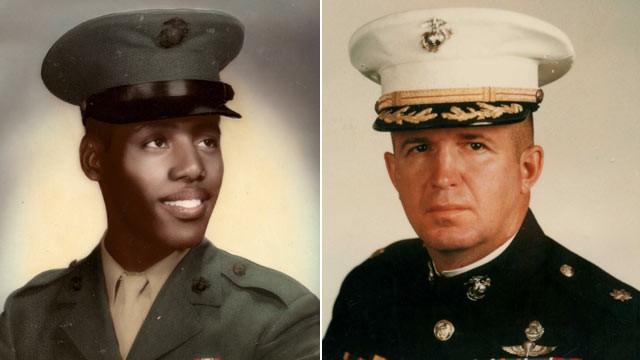
Former Marines Jim Volkmar and Arthur Phillips always wondered what had happened to each other. They last saw each other more than four decades ago in as a haze of morphine as doctors worked furiously to patch them up.
Volkmar was a platoon commander, Phillips his radio operator. On that March day in Vietnam in 1969, they had set out to help rescue members of their platoon who were pinned down by the Viet Cong.
As they made their way through a cornfield, a device, possibly a mortar, exploded in their midst.
“It picked me up, and I did a summersault and landed on my back,” said Volkmar. “I saw Arthur was standing rigidly and his finger was on his throat, and blood was coming through his fingers.”
Both men were picked up by helicopter and flown to their base ship.
“They took me to the operating room,” said Phillips. “I was sprayed head to toe with shrapnel.”
Doctors also worked on Volkmar, whose left foot, leg and arm were severely injured.
It was the last day the two men ever saw each other. Phillips was sewn up and returned to combat. Volkmar spent nine months in military hospitals and was then reassigned to the U.S.S. Hornet in Long Beach, Calif.
This year, Phillips was trolling the Internet and stumbled on an article on the website TogetherWeServed written by Volkmar and recounting that day he and his radio man were wounded. Phillips realized he was that radio man, and that this was his long-lost colonel.
The next day, the two were able to connect by phone. It was March 13 of this year, 44 years to the day they were blown up.
“If you ever want to see the hand of God at work, this is it,” said Lt. Col. James Volkmar who made a career out of the Marines.
“I recognized that voice right away,” said Phillips. “You know, I haven’t heard that voice in 44 years.”
The two talked for more than an hour.
“It was like we were standing right there before the device hit and went boom. It was like the years just fell away,” said Volkmar.
Phillips, who worked for the U.S. Postal Service for 28 years, lives in Massachusetts. Volkmar is in Texas. The two hope to connect in person this summer.
TogetherWeServed.com is a website dedicated both to memorializing and to reconnecting veterans from all branches of the service. Volkmar called it “truly uplifting and inspiring.”
Pam Jeans couldn’t agree more. Her husband of 47 years, Duel Jeans, is also a former Marine. He served during the Korean War.
The couple stumbled on the website when Duel Jeans was trying to find buddies who had fought alongside him.
Former Marine and Korean War veteran Duel Jeans, with his wife Pat.
Pam Jeans found herself hooked on the stories and profiles of the men and women who had served their country. She began spending hours online researching genealogy sites, obituaries, looking for any information she could get her hands on. She used the information to create remembrance profiles of Marines who served in Korea who have since passed away.
“The main thing for me,” said Jeans, “was making sure these fellows weren’t forgotten.”
She has certainly done that. Jeans has created a record 12,585 remembrance profiles of the Korean War veterans for TogetherWeServed.com.
“It’s not the numbers I’m interested in so much as the stories,” said Jeans. “Seeing their pictures, you can actually see them go from a young boy to a man.”
This Memorial Day weekend, TogetherWeServed is putting out a call to families whose loved ones died while in the military.
The website now has 90,000 profile pages in its Roll of Honor: soldiers, Marines, sailors and airmen who served from World War II until today. They’re hoping families of these men and women will add to the profile pages with pictures and details of their service.
“I think what we will ultimately end up with, if we’re not already there, is the largest reservoir of historical information on all services across the board,” said former soldier and site historian Mike Christy.
Pam Jeans is still working hard to make sure that happens. When she’s not taking care of her 83-year-old husband, who now suffers from dementia, she’s creating another profile of yet another Korean War veteran.
Even with more than 12,000 under her belt, she’s hardly slowed down.
“You would think after all this time, I would be tired of doing it,” she said.
Yet as she finds veterans to profile, veterans who might otherwise be forgotten, Jeans said, “Every day there is something new that inspires me in some way.”